Always On, Always Breaking: The Hidden Cost of Synchronous System Design
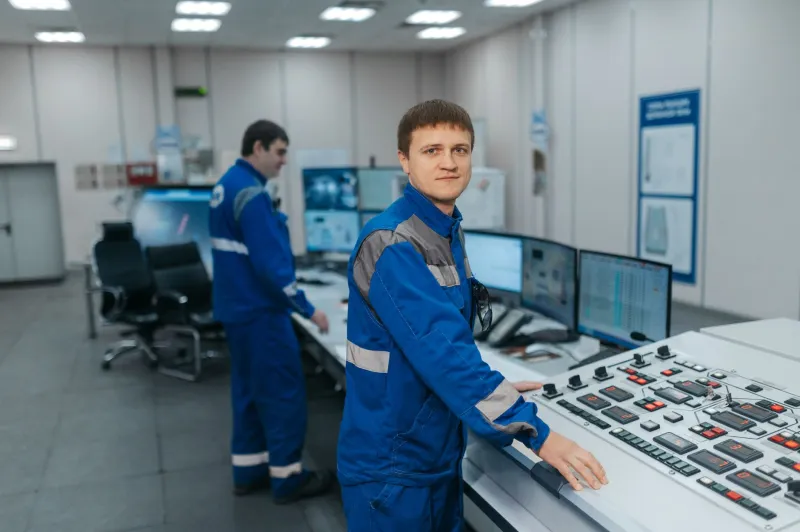
There is a particular kind of confidence that comes with watching a dashboard update in real time. Numbers shift, statuses change, and the system appears to breathe. For many engineering teams and the stakeholders who evaluate their work, this liveness feels like proof of quality. It signals that the software is alert, responsive, and in control.
What it rarely signals is whether any of that complexity was actually necessary.
The assumption that synchronous, real-time architecture is inherently superior to asynchronous alternatives has become one of the more quietly destructive defaults in modern software development. It shapes infrastructure decisions, drives tooling choices, and — perhaps most significantly — determines how much cognitive load engineers carry every day. The cost of that assumption is rarely calculated until it becomes impossible to ignore.
The Real-Time Reflex
When product teams specify requirements, the phrase "real-time" functions less as a precise technical constraint and more as a cultural signal. It communicates ambition. It implies that the system is serious, modern, and built for scale. The problem is that "real-time" is almost never interrogated. What latency threshold actually matters to users? Would a two-second delay be acceptable? Five seconds? In the overwhelming majority of consumer and enterprise applications, the honest answer is: yes, a modest delay would be entirely acceptable, and users would never notice.
Yet engineering teams build accordingly — reaching for WebSockets when polling would suffice, standing up streaming pipelines when a scheduled job would deliver equivalent business value, and coupling services synchronously when a message queue would reduce blast radius dramatically.
The result is infrastructure that demands constant attention. Every link in a synchronous chain must be healthy for the system to function. One slow dependency becomes everyone's problem. A database experiencing elevated latency cascades instantly into degraded user experience across every connected service. The system is only as resilient as its weakest real-time component.
Coupling as a Hidden Tax
Synchronous architecture is, at its core, a form of tight coupling. When Service A calls Service B and waits for a response before proceeding, the operational health of Service A becomes structurally dependent on Service B. This dependency is obvious when written out plainly, yet it is routinely introduced without deliberate evaluation.
In distributed systems, this coupling multiplies. A single user request may fan out into a dozen synchronous downstream calls, each carrying its own latency, failure probability, and timeout behavior. Engineers who have debugged cascading failures in microservices environments will recognize the particular exhaustion of tracing a timeout across six services to find that a third-party rate limit was the original cause.
Asynchronous patterns — message queues, event streams, background workers — decouple producers from consumers in ways that make systems dramatically more tolerant of partial failure. If a downstream service is temporarily unavailable, messages accumulate rather than requests fail. Processing resumes when capacity is restored. Users may experience a delay, but they do not experience an error. For a broad class of use cases, this is a substantially better outcome.
Eventual Consistency Is Not a Compromise
One of the more persistent misconceptions in distributed systems discourse is that eventual consistency represents a degraded alternative to strong consistency — something teams accept reluctantly when they cannot afford the infrastructure to do things properly. This framing deserves to be challenged directly.
Eventual consistency is not a fallback. It is an architectural acknowledgment of physical reality. Networks are unreliable. Clocks drift. Nodes fail. Any system that claims to provide strong consistency across geographically distributed infrastructure is managing enormous complexity to produce a guarantee that most application domains do not actually require.
Consider the canonical example of a social media feed. If a post appears in one user's feed three seconds before it appears in another's, no meaningful harm has occurred. The business logic does not require global ordering. The user experience does not depend on synchronized state. Designing that system around strong consistency guarantees introduces real engineering cost to solve a problem that does not exist.
The discipline lies in identifying which parts of a system genuinely require strong consistency — financial transactions, inventory reservations, access control decisions — and applying the appropriate guarantees selectively rather than universally.
What Synchronous Design Costs Teams
Beyond infrastructure reliability, there is a human dimension to this architectural pattern that receives insufficient attention. Systems built around synchronous, real-time assumptions require a particular kind of operational vigilance. Latency regressions surface immediately and visibly. Dependency failures propagate without buffer. On-call rotations become reactive rather than proactive, because the system has no tolerance for degraded states.
Engineering teams operating in this environment absorb a sustained cognitive load that compounds over time. Incident response becomes more frequent and more complex. Debugging requires holding the state of multiple simultaneously failing components in mind. The pressure to restore real-time functionality quickly can discourage the careful root-cause analysis that would prevent recurrence.
Asynchronous architectures, by contrast, tend to fail more gracefully and more visibly. A backed-up queue is observable. Processing lag can be monitored and alerted on before it becomes a user-facing problem. The system communicates its own stress in ways that allow teams to respond methodically rather than reactively.
Asking the Right Questions Earlier
The architectural decisions that determine how much synchronous coupling a system carries are typically made early — during initial design, when requirements are still being interpreted and the full operational implications are not yet apparent. This is precisely when the real-time reflex is most dangerous, because the costs it introduces will not be felt for months or years.
The questions worth asking at that stage are straightforward: What is the actual user-facing consequence of a five-second delay in this workflow? What happens to this system if this dependency is unavailable for thirty seconds? Does the business logic here require a response before proceeding, or is fire-and-forget acceptable?
Answering those questions honestly — rather than defaulting to real-time because it feels more impressive — is one of the more valuable contributions an experienced architect can make to a project.
Rethinking the Default
Synchronous, real-time architecture will always have its place. Low-latency trading systems, collaborative document editing, live video processing — there are domains where the complexity is justified because the user experience genuinely depends on it. The issue is not that real-time systems exist. It is that they have become the unreflective default for contexts where they add cost without adding value.
The engineering community has developed sophisticated tooling for asynchronous patterns — mature message brokers, well-documented event-driven frameworks, battle-tested queue implementations. The knowledge base exists. What often lags behind is the organizational willingness to question whether the liveness a product team requested is the liveness users actually need.
Building systems that are slightly less immediate but substantially more resilient is not a concession. In most cases, it is the more considered choice — and the one that will be easier to live with at scale.