Automated Clarity, Real Confusion: The Hidden Cost of Letting AI Write Your API Documentation
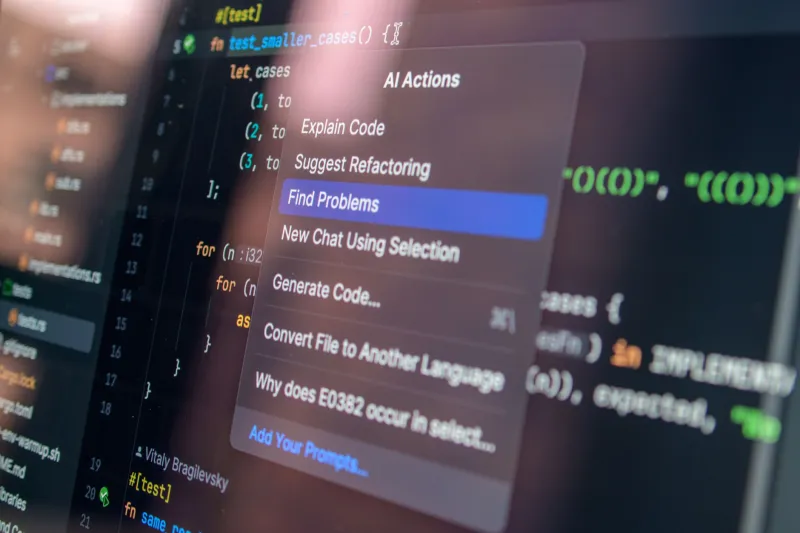
There is a particular kind of confidence that comes from a well-formatted document. Headings are clean, parameters are listed in tidy tables, and example requests sit beside expected responses like solved equations. When that document was written by a language model trained on millions of code repositories, however, the confidence it projects may have very little to do with the system it purports to describe.
AI-generated API documentation has moved from novelty to expectation in a remarkably short period. Development teams now routinely pipe endpoint signatures, type annotations, and function comments into large language models and receive polished documentation in return. The output looks authoritative. It reads professionally. And in many cases, it is subtly, consequentially wrong — or at least incomplete in ways that matter enormously at production scale.
The Difference Between Description and Understanding
Documentation has always served two masters. On one hand, it communicates how a system behaves to people who did not build it. On the other, the act of writing documentation forces the author to confront what they actually understand about the system they did build. This second function is not incidental — it is arguably the more valuable of the two.
When an engineer writes documentation manually, they encounter friction. They must decide how to describe edge cases they may have glossed over during implementation. They must articulate why a parameter behaves differently under certain conditions, which often requires going back to the code to verify their own assumptions. That friction is generative. It surfaces gaps in understanding before those gaps become support tickets, incident reports, or silent data corruption.
AI generation eliminates most of that friction. The model produces a plausible explanation based on pattern-matching against its training data, and the engineer's primary task becomes review rather than composition. In practice, review is a far weaker forcing function than authorship. Reading a document that already sounds correct is a poor mechanism for catching the subtle behaviors it may have missed entirely.
What Gets Lost in the Generation
The categories of information that AI tools handle poorly are precisely the categories that matter most to downstream consumers of an API.
Architectural intent is one such category. An endpoint may behave one way today because of a deliberate tradeoff made eighteen months ago — a decision to prioritize consistency over availability in a specific failure mode, or to defer a particular computation to reduce latency on the hot path. That decision lives in a pull request, a design document, or institutional memory. It does not live in a function signature, and a language model has no reliable way to surface it.
Breaking changes present a similar problem. A model generating documentation from the current state of a codebase cannot know what changed between versions, which behaviors were once guaranteed and are now deprecated, or which implicit contracts existed between an API and its consumers. It describes what is, not what changed or why.
Subtle behavioral dependencies are perhaps the most dangerous omission. Rate limiting that applies only under specific authentication contexts. Pagination behavior that diverges when a filter parameter is absent. Retry semantics that interact unexpectedly with idempotency keys. These are the kinds of details that experienced engineers document with explicit warnings, often because they have personally been burned by them. A language model, working from code alone, may mention the parameters involved without conveying the operational significance of their interaction.
The False Sense of Coverage
Organizations that adopt AI documentation generation often experience what might be called a coverage illusion. Metrics improve: more endpoints are documented, documentation is published closer to release, and the backlog of undocumented APIs shrinks. These are real improvements in one narrow sense. But they can mask the more important question of whether the documentation that now exists is actually trustworthy.
Engineers consuming that documentation — particularly engineers new to a codebase or organization — have no reliable way to know which sections are accurate, which are plausible but untested, and which are confidently wrong. They extend trust to the document because it exists and because it is well-formatted, not because it has been validated against observed system behavior.
This dynamic is especially pronounced in organizations where the teams consuming documentation are different from the teams producing it. An internal platform team that auto-generates docs for a consumer-facing API may never encounter the misunderstandings those docs produce downstream. The feedback loop is long and indirect, and by the time a misunderstanding surfaces as a bug, its origin in a documentation error may be difficult to trace.
The Atrophy of Explanatory Skill
Beyond the immediate accuracy problem, there is a longer-term concern about what happens to engineering teams that routinely outsource explanation to automated tools.
The ability to articulate how a system works — precisely, completely, and with appropriate caveats — is not a soft skill separate from engineering competence. It is a direct expression of it. Engineers who regularly write documentation develop a kind of discipline around specification: they learn to notice when their mental model of a system is vague, and they develop habits of verification that make them better at building systems as well as describing them.
When that practice is replaced by prompt-and-review workflows, those habits atrophy. Teams may find, over time, that they have difficulty onboarding new members not because the documentation is absent but because no one on the team has recently been forced to explain the system in full. The knowledge exists, but it has not been exercised into a form that transfers.
Toward a More Honest Workflow
None of this argues that AI assistance has no place in documentation. Generating first drafts, formatting parameter tables, and flagging sections that may be incomplete are all reasonable uses of language model tooling. The problem arises when generation replaces authorship rather than supporting it.
A more defensible workflow treats AI output as a scaffold, not a product. Engineers use generated drafts as prompts for their own reflection, filling in architectural context, explicitly documenting known edge cases, and marking sections that have not been validated against live system behavior. Documentation is then versioned alongside code with the same rigor applied to breaking changes as to the API itself.
This approach does not recapture all of the friction that manual documentation provides, but it preserves the most important element: a human being who has read the documentation they are shipping and is prepared to stand behind it.
The alternative — documentation that writes itself, reviewed by engineers who trust it because it sounds right — is not a documentation practice at all. It is the appearance of one, which is considerably more dangerous than having no documentation at all.