When Least Privilege Becomes the Greatest Liability: How Zero-Trust Friction Drives Users Toward the Exits
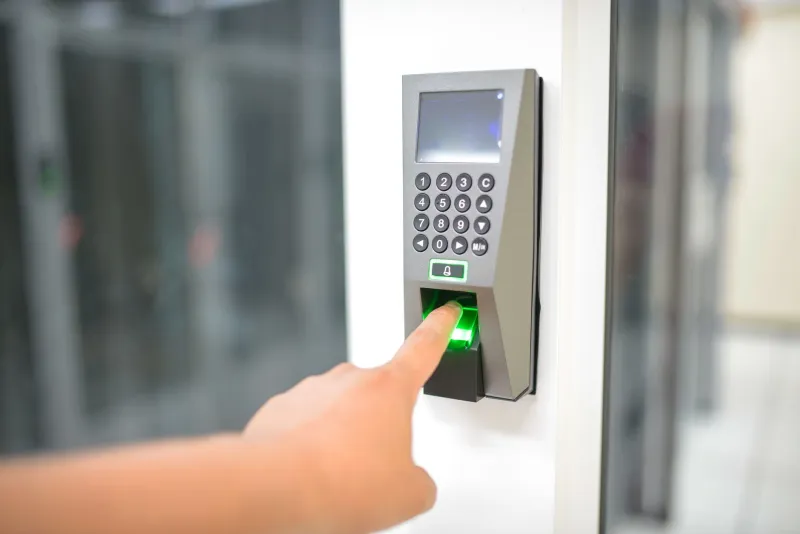
The principle sounds unimpeachable on paper: grant every user only the minimum access required to perform their job, verify identity at every boundary, and trust nothing by default. Zero-trust architecture, as a philosophy, emerged from a legitimate frustration with the perimeter-based security models that dominated enterprise IT for decades — models that treated the internal network as a safe zone and left organizations catastrophically exposed once that perimeter was breached.
But somewhere between the whiteboard and the production environment, a quiet crisis takes hold. The same verification loops that make zero-trust architecturally sound can make it operationally unbearable. And when systems become operationally unbearable, users do not simply endure the friction — they route around it.
The Gap Between Security Design and Human Behavior
Security architects tend to model threat actors with considerable sophistication. They account for credential stuffing, man-in-the-middle attacks, lateral movement across compromised accounts, and privilege escalation via misconfigured roles. What they model with considerably less precision is the behavior of a tired sales associate at 4:45 PM on a Friday who cannot pull up a client contract because the document management system has triggered its third re-authentication prompt of the afternoon.
That associate does not file a ticket. They call a colleague with broader access and ask them to pull the file. Or they remember that the shared departmental login — created two years ago during an onboarding crunch and never properly decommissioned — still works. Or they escalate to IT with a request that has become distressingly common in organizations that have deployed granular permission systems without adequate usability review: "Can you just give me admin for now?"
Each of these responses represents a security failure. None of them were introduced by a malicious actor. All of them were engineered, in a very real sense, by the architecture itself.
Re-Authentication as a Threat Vector
Continuous authentication is one of zero-trust's foundational mechanisms. Rather than establishing a session at login and maintaining it implicitly, systems operating under zero-trust principles periodically re-verify that the authenticated user is still who they claim to be, still operating from an expected context, and still authorized to access the resource in question.
The security rationale is sound. A session token stolen hours after initial authentication should not provide indefinite access. Context changes — an unusual IP address, a new device, an atypical access pattern — warrant additional scrutiny.
The implementation reality is frequently punishing. Multi-factor authentication prompts that arrive mid-workflow interrupt cognitive focus and consume time. Token expiration windows calibrated for security rather than usability force repeated logins during extended work sessions. In environments where users interact with a dozen or more integrated systems throughout a workday, the cumulative authentication burden can consume meaningful portions of productive time.
Research on security fatigue — a documented phenomenon in which users become desensitized to security prompts through sheer repetition — suggests that high-frequency authentication demands do not maintain their deterrent effect over time. Instead, users develop reflexive approval behaviors, clicking through prompts without scrutiny, which transforms a verification mechanism into a ritual with no protective value.
Granularity as a Configuration Burden
The least-privilege model requires someone to define, for every role, every resource, and every operation, exactly what access is appropriate. In a small organization with stable workflows and a dedicated security team, this is demanding but tractable. In a large enterprise with dynamic teams, evolving product surfaces, and frequent personnel changes, it becomes something closer to an ongoing negotiation with entropy.
The practical consequence is that permission configurations drift. Roles accumulate access grants that were appropriate for a previous project and were never revoked. New workflows emerge faster than access policies can be updated to accommodate them. Employees with legitimate business needs find themselves blocked by policies that have not kept pace with organizational change.
When the legitimate path is blocked, the workaround path becomes attractive. And workaround paths, almost by definition, exist outside the visibility of the systems designed to monitor and control access. A user who obtains access through a colleague's credentials, or through an administrative override that was never properly scoped, generates no audit trail that reflects the actual access pattern. The logs look clean. The risk is invisible.
The 'Just Give Me Admin' Failure Mode
Among IT and security professionals in the US enterprise context, the phenomenon is well recognized even where it is rarely discussed openly: users with persistent access friction eventually escalate toward the path of least resistance, which is frequently a request for administrative or elevated privileges that sidestep the granular controls entirely.
This is, in security terms, catastrophic. Administrative access granted as a convenience measure to resolve a friction complaint is administrative access that exists outside the intended permission model. It is often granted temporarily and made permanent through neglect. It is rarely reviewed with the same rigor applied to purpose-built roles. And it represents exactly the kind of implicit trust that zero-trust architecture was designed to eliminate.
The irony is structurally significant: a security model built to prevent over-permissioned accounts can, through the friction it generates, produce over-permissioned accounts at a higher rate than a more permissive baseline model would have.
Designing for the Behavior You Will Actually Get
None of this constitutes an argument against least-privilege principles or zero-trust architecture as such. The underlying security logic remains valid. What it does argue for is a more honest accounting of the behavioral dynamics that security architecture puts in motion.
Systems that ignore usability do not produce users who comply with inconvenient security controls. They produce users who find ways to circumvent those controls while maintaining the appearance of compliance. The audit log shows an MFA approval. It does not show that the approval was reflexive, uninspected, and completed while the user was on a phone call.
Design decisions that reduce authentication friction for low-risk operations — contextual trust scoring, device-bound credentials, session continuity within well-defined risk thresholds — are not concessions to convenience. They are recognitions that the security value of a control is a function of how consistently it is applied, and that controls applied inconsistently because they are intolerable produce worse outcomes than controls applied consistently because they are proportionate.
The permissions paradox is ultimately a design problem, not a user problem. Systems that ask too much, too often, in contexts where the burden feels disproportionate to the risk, will be worked around. Building security architecture that accounts for this reality is not a compromise of security principles — it is their most rigorous application.