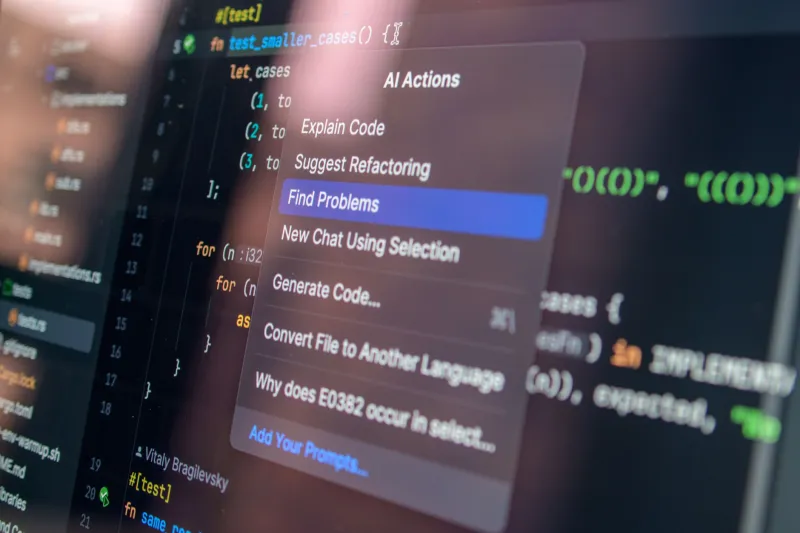
Copy, Paste, Forget: Why Wiki Code Examples Outlive Their Own Accuracy
Photo: Official GDC, CC BY 2.0, via Wikimedia Commons
Somewhere in your organization's wiki there is a block labeled Quick example. It was accurate when someone wrote it. It has since been copied into dozens of pull requests, pasted into at least one production hotfix, and never executed by its author again.
This is not a story about carelessness. It is a predictable consequence of how knowledge bases treat code: as text to be read rather than software to be run. Prose tolerates drift. A sample that has slipped by one renamed parameter, one rotated credential scheme, or one changed default does not. When the wiki is the de facto onboarding path — and in most American engineering organizations it still is — the snippet becomes a new hire's first interface with a production system, and frequently the least maintained interface in the entire stack.
The Lifecycle of a Wrong Answer
A snippet usually begins honestly. An engineer solves a real problem, writes a short example, and posts it where colleagues will find it. Context is present at birth and evaporates immediately afterward: the version of the library, the environment it targeted, the assumption that the caller already held a valid session, the fact that it deliberately omitted retry logic because the surrounding service handled it.
Within a year, the repository moves on. Authentication is consolidated behind a new gateway. A client library ships a major version with a renamed method. A default region changes. The snippet, untouched, remains a perfect description of a system that no longer exists — and unlike a source file, nothing will fail to compile.
Why Examples Rot Faster Than Prose
Three properties make code samples uniquely fragile.
They encode version-specific detail. A paragraph explaining rate limiting stays broadly true across releases. A thirty-line example calling a deprecated endpoint does not. The more useful the snippet — the more complete, the more copy-ready — the more surface area it has to drift.
They are consumed without reading. Prose is read; snippets are harvested. A developer scanning for a working call will grab the block and adapt it inside an editor, where the surrounding caveats about scope and error handling are no longer visible. The wiki's explanatory paragraphs are, functionally, comments on a function nobody calls through the documentation.
They have no owner after publication. Documentation review is rare enough; re-review is rarer still. Pages accumulate an author, a creation date, and no steward. The person who could have said this stopped being right in March has moved teams, and nothing in the system prompts anyone else to ask.
Four Ways a Snippet Reaches Production
In incident retrospectives, the same transmission paths recur.
- The onboarding copy. A new engineer pastes an example verbatim because it is the only documented path, and the missing error handling surfaces only under load.
- The expedited fix. An on-call engineer under pressure lifts a known-good block from the wiki rather than reverse-engineering the current API, importing an assumption about timeouts or pagination that the original context made safe.
- The confident recommendation. A senior engineer links the page in a code review, implicitly vouching for content last edited two years earlier.
- The loop back. The pasted snippet becomes part of a new service, gets documented in a new page with the same omissions, and the drift compounds.
None of these require anyone to be wrong in the moment. That is precisely what makes the pattern durable.
What a Living Example Costs
Executable documentation has a real price: examples must run in CI, which means they need fixtures, credentials, and a maintenance budget. That price is usually rejected at the page level and accepted invisibly at the incident level.
The middle path is cheaper than both. It begins by treating every code block as a claim with an expiration date.
Attach provenance to the block, not the page. A short front-matter comment recording the last verified date, the verifying engineer, the library version, and the environment. A block without that metadata should be read as illustrative rather than authoritative.
Distinguish executable from explanatory examples. Examples intended to be copied belong in a tested repository with the wiki embedding them by reference. Examples intended to illustrate a concept should be visibly simplified — and labeled so.
Make verification cheap. A single command per page that runs the samples against a sandbox and reports pass or fail converts documentation upkeep from an act of diligence into a scheduled job.
Quarantine on staleness. Pages unverified for twelve months should carry a banner and lose their copy button. This is the least popular recommendation and the most effective, because it moves the cost of doubt onto the reader before the cost of failure lands on production.
Give every page a steward. Not an author — a steward. Someone whose name appears in the header and who receives a quarterly prompt to confirm or retire.
The Retirement Protocol
Retiring a snippet is an editorial act, not a deletion. Replace the block with a pointer to the current example, note the version in which the old form stopped working, and keep the page as a stub with a redirect. Engineers searching for the old pattern should land on the correction rather than on nothing.
The wiki is the open knowledge base for the digital age, and the phrase is only honest if what it stores can be trusted at the moment of retrieval. A snippet that has never been run is not knowledge. It is a rumor with syntax highlighting — and rumors, in this domain, compile.